
How Do I Know If I Need VOC Testing? A Singapore Homeowner’s Guide
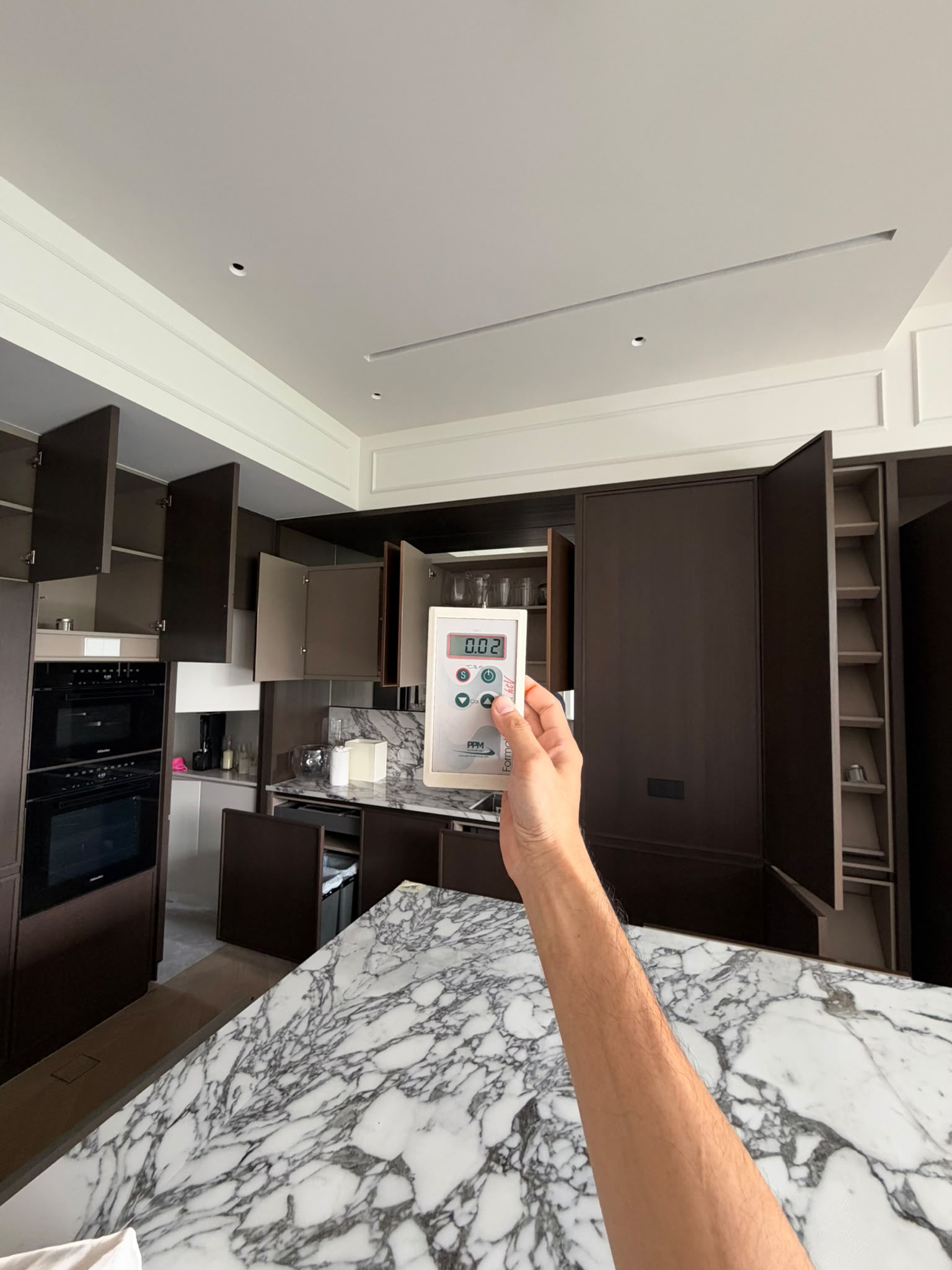
Short answer: You likely need VOC testing if you’ve recently renovated, installed new carpentry or furniture, notice a persistent chemical smell, or experience headaches or irritation that ease when you leave home. Testing is also worth considering for households with babies, seniors, pregnant women or asthma sufferers.
In Singapore’s sealed, air-conditioned homes and offices, chemicals released by building materials can linger for months. Here is how to tell whether yours is a concern.
What Are VOCs, and Why Do They Matter in Singapore?
Volatile organic compounds (VOCs) are chemicals that evaporate easily at room temperature. Indoors, they come from paint, adhesives, varnishes, laminates, composite wood (plywood, MDF, particleboard), carpets, furniture and cleaning products.
Formaldehyde is the VOC most often discussed locally. It is widely used in the resins that bond wood panels, which makes it common in built-in wardrobes, kitchen cabinets and feature walls. Other VOCs, such as benzene, toluene and xylene, can come from solvents, paints and glues.
Singapore’s conditions make this more relevant. Most homes are renovated heavily, rooms are often closed with air-conditioning running, and warm, humid weather can increase how fast materials release chemicals. Poor ventilation then lets those emissions build up.
7 Signs You May Need VOC Testing
1. You recently renovated. Fresh carpentry, painting and flooring are the most common triggers, especially in new BTO flats, resale homes and condos.
2. You have a lingering chemical smell. A sharp, sweet or “new furniture” odor that doesn’t fade after weeks is a warning sign. Some harmful VOCs have little or no smell, so a lack of odor isn’t proof of safety.
3. You experience unexplained symptoms. Eye, nose or throat irritation, headaches, dizziness, nausea or coughing may be linked to indoor air. A telling clue is when symptoms improve after you leave the premises.
4. Vulnerable people live there. Infants, young children, the elderly, pregnant women and people with asthma or allergies are more sensitive to indoor pollutants.
5. You’re setting up a nursery or new bedroom. New cots, mattresses and wardrobes concentrate emissions in a small space where a child sleeps for hours.
6. You’ve bought a lot of new furniture at once. Several panel-based pieces in a closed room can add up.
7. You manage an office, clinic, shop or studio. Fit-outs, printers, cleaning chemicals and limited fresh air intake can all affect air quality. A survey of 100 air-conditioned shophouse units found most lacked outdoor air provision, which can let chemical pollutants build up.
These symptoms are non-specific and can have other causes, such as dust, mold or viral illness. Testing is the only way to confirm whether VOCs are involved.
What Are the Safe Limits in Singapore?
Singapore’s main reference is SS 554, the Code of Practice for Indoor Air Quality in Air-Conditioned Buildings. NEA states that there are no regulations setting permissible indoor formaldehyde limits, but SS 554 recommends a voluntary limit of 0.1 mg/m³ (0.08 ppm) over any 30-minute period, matching the WHO guideline.
In practice, 0.08 ppm is the benchmark most testing reports use for formaldehyde. Total VOC (TVOC) benchmarks vary between standards and certification schemes, so ask your testing provider which reference they use and why. SS 554 is formally written for air-conditioned non-residential premises, but it is widely used as a practical yardstick for homes as well.
Regulations are also tightening at the source. Singapore has announced a national decision to ban formaldehyde in interior paints from 2026 onwards, and the new TR 121 technical reference sets emission limits for indoor paints and coatings. On the furniture side, the Singapore Furniture Industries Council has introduced an enhanced mark that targets VOC emissions, including formaldehyde, in furniture.
These changes help, but they don’t guarantee your specific home is clean. Older materials, mixed products and poor ventilation can still cause high readings.
DIY Air Monitor vs Professional VOC Testing
A DIY air monitor is the cheaper and more convenient option. It is useful for watching general trends, such as whether readings rise after you close the windows or bring in new furniture. However, consumer sensors can drift over time, often estimate TVOC or a single gas rather than identifying specific compounds, and usually give you an app reading instead of a formal report. NEA notes that limited information exists on the accuracy and precision of low-cost formaldehyde sensors.
Professional testing costs more upfront, but it uses lab-grade air sampling and analysis, can identify specific compounds, and produces a written report that compares your results against benchmarks like SS 554. That report matters if you are deciding whether to move into a newly renovated home, raising a concern with your contractor, or documenting conditions for a tenant or employee.
In short, use a monitor to keep an eye on trends, and use professional testing when you need confirmation you can rely on. NEA also advises consumers to check whether a laboratory is accredited to measure formaldehyde in indoor air, so ask any provider for its accreditation details before booking.
How Does Professional VOC Testing Work?
Consultation: The tester asks about your renovation, materials, symptoms and ventilation.
Preparation: Windows and doors are typically closed for a set period beforehand so readings reflect realistic worst-case conditions.
Air sampling: Samples are collected from key rooms, such as bedrooms, living areas and the kitchen.
Laboratory analysis: Samples are analyzed for formaldehyde and, where needed, other VOCs.
Report: Results are compared against benchmarks like SS 554’s 0.08 ppm formaldehyde value, with recommendations.
When to test: Ideally after renovation and furnishing are complete but before you move in, or as soon as symptoms appear. Emissions often decline over time, but not always quickly, so a test shortly after installation may read higher than one taken months later.
What If Your VOC Levels Are High?
High results don’t mean your home is unsafe forever.
Typical steps include:
Increase ventilation: Open windows and use fans or mechanical ventilation when the weather allows.
Find the source: Wardrobes, cabinets and new furniture are frequent culprits.
Reduce or replace emitting items: Sealing or replacing the worst offenders can lower levels.
Consider professional treatment: Specialist formaldehyde and VOC removal services can help, and KingofFormaldehyde.Sg can advise on suitable options.
Retest: Confirm that levels have dropped below the benchmark.
Be cautious about claims that a single spray or gadget will “eliminate” formaldehyde permanently. NEA does not maintain a list of approved formaldehyde removal companies or recommend any. Look for transparent methods, a testing-first approach and retesting included.
Frequently Asked Questions
Is VOC testing mandatory in Singapore?
For most homes, no. Formaldehyde limits are voluntary guidelines, though some certifications, tenancy requirements and corporate fit-outs may call for testing.
How soon after renovation should I test?
Ideally once carpentry, painting and furnishing are finished and before move-in. Retest after remedial work to confirm improvement.
Can green-labelled products replace testing?
Low-emission products reduce risk, but your final indoor air depends on all materials combined, plus ventilation. Testing shows what is actually in your air.
Is a chemical smell the only warning sign?
No. Some VOCs aren’t easily detected by smell, and odor sensitivity varies from person to person.
How often should I test?
Test after major renovations, new furniture installations, or whenever symptoms or odors return. There’s no fixed schedule for stable homes.
How much does VOC testing cost in Singapore?
Pricing depends on the number of rooms, the compounds tested and report requirements. Request a written quote that lists what is covered.
Final Thoughts
If you’ve renovated recently, have vulnerable family members, or simply can’t shake a chemical smell or unexplained symptoms, VOC testing gives you facts instead of guesswork. Accredited lab results measured against SS 554 benchmarks help you decide whether your home needs treatment and then confirm that it worked.
Not sure whether your home needs testing? Contact KingofFormaldehyde.Sg for an assessment tailored to your property.